Latest Posts
Browsing Category "Driven By Dan Scanlan"

‘15 JOHN COOPER WORKS MINI: SIZE MATTERS!!

- Minggu, 17 Januari 2016 No Comments

This is my favorite adult go-kart, but its price, and hard suspension on some surfaces on SPORT – not as much fun, blogs Dan Scanlan.


When Alec Issigonis designed the first MINI in 1959, it was a tiny 120-inch-long coupe. Then racer and tuner John Cooper got hold of one in 1960 and made it a tiny terror on race tracks and rally courses around the world.


Fast forward millions of MINIs later, and its family has grown in variety as well as size. But despite the MINI Paceman, Countryman and Clubmans out there, the BMW-owned company hasn’t forgotten what made MINIs maxi, or who made them fun. So while the latest MINI Hardtop is five inches longer than the last generation (151.9 inches), John Cooper’s spirit and big (for its size) power remains.

·     

The MINI lineup starts with a turbocharged 134-horsepower 1.5-liter/3-cylinder (11 more than the previous 4-cylinder), then the Cooper S’s 2-liter, 189-horsepower (8 more) Four. But our John Cooper Works Hardtop has the ultimate - a turbocharged 2-liter, 228-horsepower/236 pound-feet of torque Four. The new engine gets a specially developed turbocharger integrated in the exhaust manifold, with direct injection and BMW’s fully variable VALVETRONIC valve control. That makes it the most powerful MINI, each horsepower nudging only 11.5 pounds of hot hatch around! 


The car has MID, SPORT or GREEN driving modes that vary accelerator, steering and exhaust sound as well as its six--speed automatic transmission’s shifting and suspension firmness. GREEN dampens the gas pedal input and dials back a/c; SPORT firms up suspension, increases engine response and really firms up steering and suspension.


Our 8,500-mile-old red rocket leaped off the line in SPORT with some wheelspin to 60-mph in 5.8 seconds, a tenth-second under the Cooper S we tested last year; 100-mph took just over 13. The exhaust crackled and popped on overrun as it shifted quickly, with turbo whistle on acceleration and wastegate chirrup when you back off. The paddle shifters shifted very quickly, SPORT keeping the transmission in a lower gear for faster response. The engine shuts off at stops, then fires quickly when your foot begins to inch off the brakes. It seemed to save gas – we saw an indicated 30-mpg. 


The MINI JCW gets familiar MacPherson strut front/multi-link rear suspension, but with aluminum swivel bearings plus high-strength steel axle supports and wishbones up front and more steel in back for added stiffness. The result is a firm yet fairly compliant ride over bumps in MID, and very firm with quick and decisive rebound control in the Dynamic Damper Control’s SPORT setting. Over cobblestones or speed bumps, the ride quality is super stiff with a hard edge and not fun for some folks. It’s aggravated by the very slim sidewalls – there’s about an inch between tread and outside front wheel rim when we circled our skidpad. 


That said, on that skidpad or a smooth curving road, the MINI JCW is positively eager to turn in and stay planted, go-kart agile and nimble with superb steering feel. It goes around curves like it was tied to a string. It barely leaned in a turn, hanging in quite neutrally. The front tires understeered progressively when pushed and it was easy to catch with throttle and stability control, which can be cut back or turned off. It truly was a point-and-shoot four-wheeled weapon that can be pushed, then played. I wish I’d had one when we recently tackled California Panoramic Highway northwest of San Francisco in a base MINI, and that little coupe did those winding mountain roads proud. 


An electronic locking function for the front axle differential and another system that irons out torque steer in the electromechanical power steering leaves it very direct with lots of feel. The disc brakes, with Brembo calipers up front, offered very good control and a quick bite, with quick stopping power and no fade after repeated hard use. Go ahead, just play hard and the MINI JCW has fun doing it!


The third-generation MINI looks like the first – a two-box shape with wide-eyed headlights, a pert rear end and minimal overhang. There is a longer nose on the ‘15 MINI than before, while the John Cooper Works Hardtop gets some aggression added to the cute. 
Oval chrome-trimmed LED headlights flow around the front fenders’ corners, with glowing DRL light rings. John Cooper Works black stripes flank the fake hood scoop above a chrome-trimmed grill with gloss black bumper above a very aggressive lower air dam with functional intakes. A black accent runs off the air dam to become flared wheel arches framing bulging 5-spoke JCW Cup silver and black wheels wearing low-profile Dunlop SportMaxx 18-inch performance rubber. Big LED taillights frame the back hatch under a sculpted JCW roof spoiler. The car has an athletic stance with aggressive rubber peeking out of fenders front and rear, its longer face daring the world to get in its way.


MINI interiors are a bit bigger, and not as cartoonish as the first-gen versions in 2000. But they still have character – and some oddities. For example, our MINI’s door handles inside and out are lit at night, those on the interior phasing through colors before settling on green. Inside, JCW sports seats done in black with white stripes have extendable BMW-style thigh bolsters. They were very supportive and firm, with manual adjustments and lumbar. The JCW steering wheel has a fat leather-clad rim with stereo, cruise and phone buttons.


Under the center of the padded black dash top is what looks like a big gloss black digital watch with minute marks on the rim. But that’s not the huge speedometer of past MINIs. This generation moves a 160-mph speedo atop the steering column with a multi-function trip computer display on the bottom and 8,000-rpm tach on the left. That big center circle is an 8.8-inch-wide color navigation screen that also displays the AM-FM-SiriusXM audio; multimedia; smartphone/Bluetooth and contacts; MINI Connected for smartphone apps; car settings; owner’s manual; and “Driving Excitement.” That last is a power and torque display with telltales, plus engine and exterior temperature readouts and engine mode. It’s controlled by a BMW iDrive-like twist & tap controller on the center console. It’s tough to find sometimes on the move, as are its menu buttons. But voice command works well for audio and navigation. 


The big circle also has an LED light ring that pulses red when the volume knob is used, or white, red or green depending on which drive mode (MID, SPORT or GREEN) is selected. There’s also a pulsing red engine Start switch flanked by retro-looking toggle switches for the engine on/stop economy setting and traction/stability control. Ahead of the round gearshift base are a 12-volt outlet and MP3 and USB ports. The six-speaker stereo is good, not great, with distortion when cranked. A slightly longer wheelbase means one, maybe two six-footers can be squeezed in. The rear seatbacks split 60/40 to expand the tiny 8.7-cubic-feet of cargo space.


A base MINI with 3-cylinder starts at $20,700, while a Cooper S was $24,700 and our John Cooper Works version based at $30,700, with standard 6-speed manual, cruise and stability control, 17-inch alloy wheels, Brembo brakes, AM/FM stereo and driving mode selector. Our JCW added $1,500 automatic transmission with paddle shifters; $750 media package with center armrest and the Visual Boost; $750 navigation; $750 Dynamic Damper Control; $650 cold weather package with heated front seats; $100 black strips and other trim options that brought the final price to a not-so-mini $37,350. Some friends commented that that’s a lot of cash for a MINI.


For more information on the latest Minis, please visit http://www.miniusa.com/content/miniusa/en/tools/learning/build.html


‘16 CADILLAC ATS-V: TORQUE IS KING!

- Senin, 28 Desember 2015 No Comments

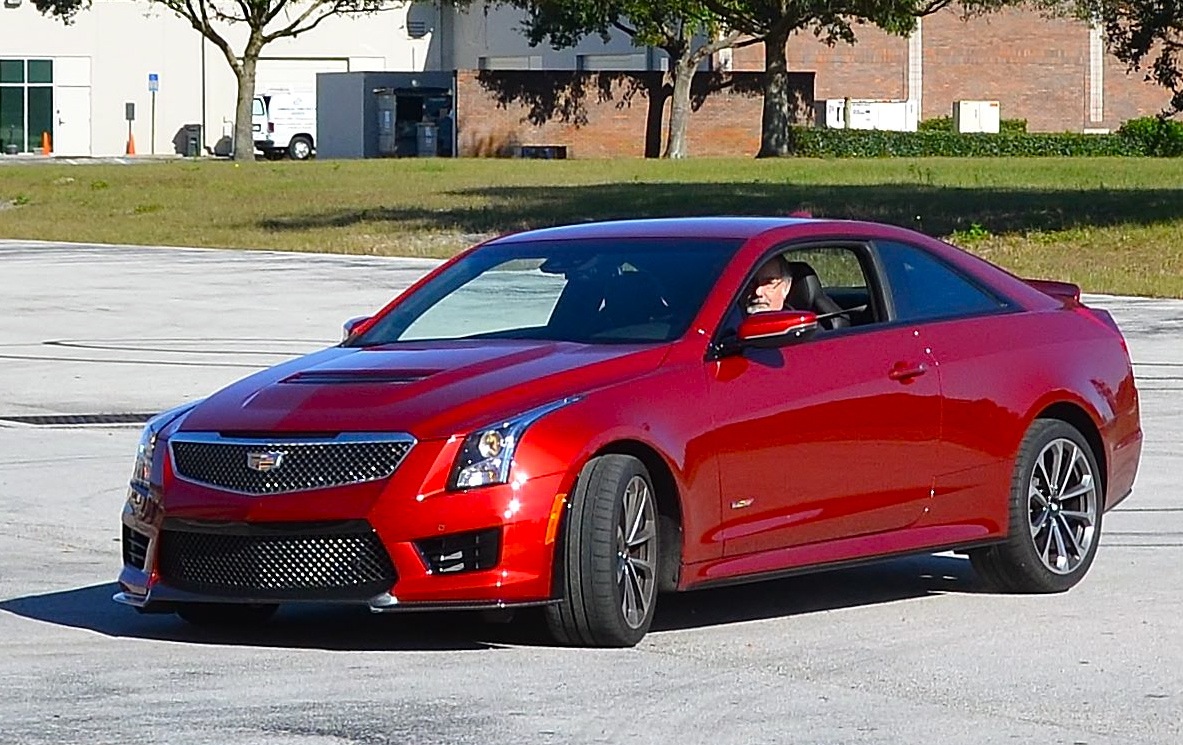
The ATS-V Coupe’s aggressive looks plus a nimble chassis and powerful high-tech V-6 make it a match for BMW’s M, blogs Dan Scanlan.


The holy grail of sports coupedom is the BMW M4 – 425-horsepower and 60-mph from a standstill in 4.1 seconds, and the dance moves of a prima ballerina combined with a cheetah. And until now, maybe only Mercedes-Benz’s varied AMG products could take on the Bimmer for the golden ring of sports coupes. That was until now. Say hello to my new best friend – the ‘16 Cadillac ATS-V Coupe. It’s a compact two-door with twin-turbo 464-horse V-6 aimed right at BMW’s M4 coupe!


The base ATS has a 202-horsepower 2.5-liter Four, with a 2-liter turbocharged Four with 272-horsepower and a 335-horsepower V-6 available. But the compact Caddy king is our test coupe’s 464 horsepower and 445 pound-feet of torque through the rear wheels, below. You get a six-speed manual with rev match, no-lift shifting (keep the pedal down for full turbo boost as you change gears) and launch control. Or you can have our coupe’s eight-speed automatic transmission with paddle shift. The only issue – some second-to-first downshifts clunked.


The engine, suspension and eight-speed have four drive modes - Touring, Sport, Track or Snow/Ice. Dip deep in the throttle in Sport mode and our 5,000-mile-old V-6 growls mightily to about 6,200-rpm, spinning its rears briefly before hooking and hitting 60-mph in 4.5 seconds and 100-mph in 9.6. The on-board performance data recorder showed a quarter mile of 14.6 seconds, and 0-100-0 mph took 16 seconds.


Inside, active noise cancellation quiets down the interior, but Cadillac also funnels augmented exhaust noise inside to make the V-6 sound snarlier. Full throttle sounded like a meaty little V-8 with some V-6 snarl, and a nice overrun exhaust crackle. Sport and Track modes also blip the throttle on fast downshifts, and power is there almost anywhere across the band with no turbo peakiness. As for fuel mileage, we calculated about 15 mpg on premium.


The ATS-V’s Michelin Pilot Super Sport tires ride on the same 109.3-inch wheelbase as other ATS models. But it gets a revised multi-link double-pivot MacPherson-strut front suspension with 50-percent greater roll stiffness. The five-link rear suspension gets stronger lateral control and anti-squat geometry with stiffer bushings, higher-rate springs and a stiffer stabilizer bar. And with more bracing, there’s 25-percent greater structural stiffness.


Magnetic Ride Control’s Sport or Track settings firm up suspension and steering feel, speed up throttle and engine response and lessen traction and stability control parameters. Touring gave us the most compliant ride feel, firm but with a softer edge over bumps during quickly managed rebound. In Sport, there was a firmer edge, but it still had a nice buffer on quick rebound over bumps.


The ATS-V was a willing corner carver, with just a touch of understeer when pushed into a turn, but easy to neutralize with throttle going out. It easily stitches successive corner together, never unsettled as we jinked left, then right. The coupe stayed fairly flat and neutral on our skidpad, a subtle bit of stability control to keep the nose or tail from straying the course when we pushed. In Track mode, we could power the tail out a bit more as the transmission stayed in the gear we wanted, but Stabilitrak was still there.


Or tap the steering wheel button to disable stability and traction control and smoke them if you want to. But even then, the balanced chassis and responsive throttle plus quick steering could catch the tail. The data recorder showed 1.25 Gs in lateral grip in the skidpad in second gear.


Turn-in was immediate, the steering feel precise, direct and full of feel. Sport and Track both offered almost a manual feel that communicated very well. With 14.5-inch front brake discs with six-piston calipers and 13.3-inch-diameter rears with four-piston calipers, the ATS-V stopped flat and straight from 100-mph. Repeated simulated panic stops from 60 mph showed no fade. The ATS-V’s wedge shape is augmented with an optional carbon fiber track package that added some serious-looking downforce-generating bits that make a hell of a statement in an arresting Red Obsession Clearcoat.


Cadillac says almost every exterior panel is unique on the ATS-V, and each element has a purpose - lift reduction, enhanced cooling or reduced mass. The V-shaped nose gets a big steel mesh upper grille with thin air intake at the hood’s leading edge. There’s a wide-mouth lower intake with dark accent above. Below, a deep glossy carbon fiber splitter wraps around the edges to reduce lift at speed – and catch a driveway or curb, so be careful. Functional side vents frame the lower intake. The lightweight carbon fiber hood gets a glossy weave vent that pulls hot air out and reduces lift by channeling air through the radiator and over the car.


Halogen headlights flow along the fenders’ outer curve, while bladed LED taillights bring an upper design line to a halt. A lower door sill flares with black aero pieces. The semi-fastback raked rear window flows into a short deck with NASCAR-style near-vertical spoiler. A carbon fiber lower aero piece houses four steel exhaust tips.


 The ATS-V is an inch longer and wider and about 1.5 inches lower than the regular ATS Coupe. It lives on grippy, wide 18 x 9-inch front/18 x 9.5-inch rear Michelin Pilot Super Sport rubber on 10-spoke polished alloy and gray alloy wheels with red Brembo disc brake calipers visible inside.


Step inside and you’re greeted by deep, supportive and comfortable high-back leather and suede Recaro bucket seats, 16-way-adjustable and trimmed in leather with suede inserts. The driver faces a central 200-mph speedometer, 8,000-rpm tach and gas and temperature gauges, with a center color trip computer that shows navigation, audio and fuel mileage, engine information and turbo boost. The power tilt/telescoping steering wheel gets a thick leather rim with long magnesium paddle shifters that are easy to access behind it.


Buff carbon fiber weave sweeps around the cabin. Dashboard center lives an eight-inch touchscreen for navigation, audio, climate control and telephone, part of CUE (Cadillac User Experience). When on, the navigation screen stays blissfully clear of buttons. But move your hand close and proximity sensors activate four main system “buttons” on top, and secondary ones on the bottom. Touch controls for volume, dual-zone temperature, fan speed, defrost and seat heaters live under the screen and work fairly well. Each touch is rewarded by a “thump” of haptic feedback. Voice command also worked well. What still doesn’t is the touch control to close the center dash panel that motors up to reveal a USB port and a smartphone inductive charging plate. I would tap and tap, and the door wouldn’t close.


The 10-speaker AM/FM/SiriusXM Bose surround sound system was powerful and free of distortion. It can pair entertainment and information data from up to 10 Bluetooth-enabled devices, with two USB slots, an MP3 input and SD card slot under the center armrest. The back seat is tough to get to past front seatbacks that don’t flip all the way and leave a shoulder belt to step over, the form-fitting seats offering minimal adult head and leg room. The seat backs split and fold to expand the narrow trunk, where the battery lives for weight balance.


What about that Performance Data Recorder? Slip an SD memory card into a slot in the small glove box, and a camera mounted behind the rear-view mirror captures on-board video with data overlays of speed, gear position, rpm, lateral G-loads, throttle and turbo boost, even 0 to 60 mph, 0 to 100 mph, quarter-mile and 0-100-0 times. It can record racetrack lap times. Pop out the card and watch your "hot laps" anywhere, or on the screen when parked. A 32 GB card promised 787 minutes recording time.


A base ‘16 Cadillac ATS Coupe with the 3-liter turbo four starts at $37,995, while our ATS-V with 464-horsepower twin turbo V-6 starts at $62,665 with lots listed above standard. Our test coupe’s $6,195 track performance package added a carbon fiber Aero package with front splitter, rear diffuser, tall tail spoiler and black rocker extensions as well as lightweight battery with floor mats, tire pump and sealant deleted. The Recaros were $2,300; eight-speed automatic was $2,000; navigation with Bose surround sound and a 110-volt plug another $1,085; $995 red metallic paint; $900 alloy wheels; $595 for red brake calipers; and $305 to replace the deleted tire sealant, pump and floor mats. Final price - $78,035 with destination.


For more information about Cadillac’s world challenging V-Series models, please visit http://www.cadillac.com/v-series.html

‘15 FORD MUSTANG 5.0: SIXTH-GEN ROAD WARRIOR!

- Sabtu, 28 November 2015 No Comments

'This is a GT that can do daily commuting as well as weekend play, although it is more grand touring than some other muscle cars, blogs Dan Scanlan.'


This isn’t the first Sixth-Gen Ford Mustang GT I’ve tested. Nope - instead of starting with the 435-horsepower 5-liter Mustang, my first one was the Whipple-supercharged 725-horsepower Galpin Fisker Rocket with a dramatically restyled carbon fiber body penned by Henrick Fisker and a hand-finished Italian leather/suede interior. Now comes this sleek yellow GT, very reminiscent of the ‘69 Boss 302 Mustang my college buddy Michael had.


With memories of the past and the exotically modified Mustang in my brain, how does the current 50th anniversary model fit in the annals of ponycars?  Like the good old days, Mustangs can be corralled with multiple powerplants, although they are a bit more high-tech these days.


Power choices start with a 2.3-liter EcoBoost Four with 300 horsepower; a 3.7-liter V-6 with 310-horsepower, our car’s 5-liter V-8 with 435 horsepower and 400 pound-feet of torque, above, on up to the 526-horsepower GT-350R. Selectable Drive Modes adjust engine response to normal, sport, track and snow/rain, plus transmission and electronic stability control settings. My preference was “Sport,” giving the steering a more direct feel, faster throttle response and a bit twin-pipe growl under power. Even under full throttle, I’d like a bit more bark in “Sport.” Still, this is a very quiet ponycar at speed, with almost no wind noise. We also saw an average 20-mpg on regular.


For fastest launches, we set launch control in Track Apps and went for 3,700-rpm for our launch. Press the clutch, rev the engine and it tops out where you set it. Dump the clutch and drive mode reined in some wheel spin to get our 21,000-mile-old test car to 60-mph in 4.1 seconds, with wheel spin into second gear, then 100-mph in 11 seconds. The accelerometer claimed .87 Gs of force on launch. We noted some notchiness into second gear, but overall precision and decent throws. Flip drive mode to Track, and traction control is fully disabled for more wheel spin at launch, while some stability control stays active to handle power oversteer after a certain point, Ford said.


Up front, double-ball-joint independent MacPherson strut suspension with tubular stabilizer bar. In back, the beam axle is banished for independent suspension with new aluminum rear knuckles for less unsprung mass, and coil springs. The result is a supple yet firm suspension that doesn’t get upset in a bumpy turn. The suspension quickly handled road imperfections, loping along with a bit of quickly-damped rebound. And the rear end talked better with the front end.


The Mustang would power out its rears on cold tires, but a bit of right foot action caught it. The coupe was perfectly comfortable and neutral on an expressway ramp, with high grip level. A 90-degree right-hander in second gear was also a breeze, the rear rubber staying planted as I powered out of the turn. There’s minimal body roll as well. Set in “Sport” in an aggressive turn and the tail could power out, but it was very controllable. On our skidpad, the Mustang took a set and circled with a touch of power oversteer caught by stability control. The car had some more body roll in the skidpad, with direct steering feel and control. Put on “Track” mode, and we could power the tail out with tire-smoking oversteer. The built-in accelerometer claimed .95 Gs in left-hand turns and 1.18 Gs in right hand turns.


Steering feel was direct, with good feedback. The standard disc brakes had a firm and responsive pedal, offering solid stops and no fade after some repeated hard use. The accelerometer said we pulled 1.03 Gs in braking. Along with the backup camera, there’s blind spot detection, cross-traffic alert and adaptive cruise control that maintains distance and speed with the guy in front down to about 20-mph.


There are 10 varieties of ‘15 Mustang, but Ford obviously channeled that ‘69’s long hood/short rear deck look here, the sheetmetal drawn taut over its bones. Sitting on the same wheelbase as the last version, it is four inches shorter, but looks longer. The faux side vents and angular grille are gone. Black honeycomb fills the six-sided Ford grille that projects ahead of hooded slit headlights with triple-slit LED running lights. The lower air intake flares twin wings with faux side inlets and fog lights over a black lower air dam. The hood gets a squared-off power bulge flanked by small vents. On the flanks, two design lines frame a side channel aft of the “5.0” fender badge, then a flared black lower sill. The tail is sleeker, a gloss black panel with tri-bar taillights with sequential turn signals. It all sits on 10-spoke silver alloy wheels, below, wearing Pirelli P-Zero Nero P255/40-ZR19-inch radials. Side mirrors project a detailed galloping horse on the ground at your feet; and our newest Mustang gets an aluminum hood and front fenders for lighter weight.


More 1969 is channeled inside, with a dual-cowled black dashboard and a three-spoke steering wheel with a horse on the hub. The black buckets are comfortably supportive, while the padded cowls get dual white stitching on the edges, aluminum accents and a passenger-side alloy badge with another pony and the words “Mustang – Since 1964.”


There are inset twin gauges – the 160-mph speedometer gets “GROUND SPEED” on its face, while “REVOLUTIONS PER MINUTE” is on the 8,000-rpm tach with 6,500-rpm redline. In between, a color trip computer screen that can display engine information, radio stations, navigation and other info. It accesses menus for MyColor gauge and interior lighting, plus Track Apps - lateral, braking and acceleration G-forces; timer; braking performance; launch control and line lock. Low dash center are big alloy-look toggle switches for steering and powertrain modes, traction control and warning flashers. Next to them is a red-rimmed white “engine start/stop” button.


The rest of the cabin is stylish, well thought out and retro while not being cartoonish. The steering wheel gets a thick leather rim with stereo, cellphone and voice command buttons on the right, and trip computer and cruise control on the left. Dash center, that tubular aluminum trim hosts vents over a large navigation touchscreen with a solid 12-speaker AM-FM-SiriusXM-CD stereo, climate control, phone, Sirius Travel Link and SYNC AppLink to control smartphone apps. There are two USB ports and a pair of 12-volt outlets, plus an MP3 input and SD card slot. The driver’s seat gets three memory presets, while both get heat and cooling. The back seats are kid-sized, with almost no legroom. They split and fold to expand a decent trunk that hosts the stereo’s sub-woofer. Overall, it’s a very comfortable, quiet and user-friendly cockpit with decent visibility and fit and finish.


Mustangs start with the $23,098 V-6 fastback and $24,275 EcoBoost four-cylinder Fastback on up to the $61,295 Shelby GT350R. Our GT Premium started at $36,100 with lots of standards, then added: $1,795 12-speaker Shaker Pro-Audio; $1,595 50th Anniversary package with 19-inch Pirelli rubber and alloy wheels, 50th Anniversary floor mats and double white leather seat/dash stitching; $1,195 adaptive cruise control; $795 voice activation navigation; $495 Triple Yellow Tricoat paint; $395 security system; and $295 reverse park assist cameras and sonar sensors. Add destination and the final price is $43,490.


The new Mustang shows that having the longest ponycar heritage doesn’t mean you have to be stale. This 5.0 has the aggressive looks that hint at heritage but looks modern, plus a usable engine and suspension and good build quality. The Sixth-Gen ‘Stang is better behaved, more fluid in its corner transitions, and more fun to play with and not worry about getting slapped.


For more information about the latest Mustangs from Ford, please visit http://www.ford.com/cars/mustang/gallery/photos/

'15 ALFA ROMEO 4C: A GO-KART FOR ADULTS!

- Sabtu, 14 November 2015 No Comments

It’s got the speed and razor-sharp reflexes of a racecar with just enough leather and luxuries to live with. It talks loudly and carries a big heart, blogs Dan Scanlan. 


A.L.F.A. began in 1910 as "Anonima Lombarda Fabbrica Automobili in Milan. When Nicola Romeo took over, the name changed in 1920 to Alfa Romeo. Now it’s part of FCA – Fiat Chrysler Alliance – and the first Alfa to hit our shores since the 1990s is a baby exotic like nothing Alfa has made before.


Revealed in 2011 as a Concept, then as a production coupe in 2013, this baby Supercar hit American shores a year ago in a very limited (500) launch edition, followed with the 4C Spider.Think Italian supercar that shrunk in the wash!


The 4C Spider has brio – liveliness, verve, vivacity or just plain spirit. It also has a pure simplicity accompanied by a visceral rawness. Mounted midway in the carbon fiber chassis is an all-aluminum 1.7-liter dual intercooled, turbocharged four-cylinder engine, below, paired to an Alfa TCT (twin-clutch transmission) and DNA selector with four drive modes. Our 2,337-pound car had the optional racing exhaust, which keeps catalytic converter, removes the muffler and ends in dual exhaust tips. It barks on start-up and snarls, even at low revs. I set off a new Mustang car alarm when I started up next to it! The Alfa sounds best on  twisting roads with up-and downshifts sweetened by the exhaust snarl and crackle and turbo whistle. 


DNA stands for the Dynamic, Natural or All-weather modes that the engine and TCT can be set to. The gearshifts are designed to become most aggressive in the Dynamic and Race modes, as quick as 130 milliseconds at full throttle. The clutch acts like a manual, holding you in place until you add gas. It has a two-second hill-holder for easier starts on an incline.


All-weather sets up gentler accelerator input and engine. It still spins fast to its 6,500-rpm redline with lightning-quick up-shifts accompanied by an exhaust “blaat!,” then a neat throttle blip on clean downshifts. Switch to Natural, and more engine comes on line as exhaust snarls more. Dynamic is a more aggressive powertrain calibration with a bit less stability/traction control and even faster shifts in the boost as well as a serious snarl. It also adds a turbo boost and oil pressure display to the red-tinged digital dashboard. It’s quick - 60-mph in 4.9 seconds and 100-mph in 10.9 seconds. Play hard like we did, and 20-mpg is it – only about 200 miles range, so we had to fill up on premium a few times.


For real emotion, hold the alloy DNA switch for five seconds and it’s in Race mode. Stability and anti-slip regulation are de-activated as the driver has to paddle shift. Launch control can be activated – left-foot-brake as you gas it to a bit over 3,500-rpm, then tap the left paddle shift and release as the engine hits 5,600-rpm. That gave us 60-mph in a neck-snapping 4.1 seconds, the rears leaving twin rubber stripes before hooking with a wail/whistle/whoomp from exhaust and turbo at each razor-fast shift. Alfa says this little coupe delivers 1.1-g of lateral acceleration and 1.25-g of maximum braking deceleration. Some notes – the paddle shifters are tiny and a bit bendy at the tips. And in stop-and-go driving, clutch take-up can be a bit jerky.


The 4C rides on a front double wishbone suspension, with a rear MacPherson set-up. For North America, stiffer springs, larger front and rear sway bars and re-tuned shock absorbers. The result is a very firm feel that gets a bit jittery on bad pavement. Rebound is short and very quick, almost harsh at the limit. This really isn’t a relaxed commuter. It’s very precise steering rack requires attention on bumpy pavement. The 4C Spider follows every groove on a highway as well as asphalt patch edges. But there’s great feedback on a smooth road. The entire structure was stiff and creak-free.


With a 41/59 weight balance, engine in the middle, low center of gravity and Pirelli P-Zeros with 3,000 miles on them all-round, our 4C Spider grabbed each corner, played with it and eagerly headed to the next. The car corners flat, front tires talking when we pushed hard in the skid pad, but never going wide. Add gas as you exit a turn and it just pulls its way out, the tail kicking out just a tad, then a quick flick of the wheel and a minute gas adjustment naturally tucks it into line. The car loved to be thrown around and asked for more.


The TCT would sometimes upshift into a turn, or downshift out when I’d rather it stay put, so I’d tap it into manual to hold the gear. Manual steering fits in with the lightweight, simple nature, quick at a 15.7:1 ratio. But it’s a workout parallel parking. This is a car that asks for both hands on the wheel at speed. The four self-ventilating perforated discs with Brembo four-piston aluminum calipers in front stopped us time and time again short and straight with no fade and immediate brake engagement.


Alfa Romeos old and new have been identified by one design – the “Trilobo” grill. The 4C Spider has the most modern interpretation – a black mesh-filled triangle with hood lines that flow off the triangle’s edges and wide-mouthed intakes to cool the radiator. Those rising flared rear fenders join the flowing buttresses off the targa bar to give this mid-engine exotic a serious dose of Italian supercar.


Low-profile Pirelli P-Zero rubber lives on all four corners - P205/40ZR18-inch in front and P235/35ZR19-inch in back, living on 10-spoke dark graphite gray alloy wheels. Cross-drilled vented disc brakes with red “Alfa Romeo” calipers are easy to see. There’s a carbon fiber air intake on the driver’s-side sill to cool the gearbox. The sweptback windshield frame is carbon fiber for added stiffness in the topless Spider vs. the coupe’s alloy frame. 


A taut black cloth targa-style center section is water-tight. It rolls up and fits in the 3.7-cubic-foot trunk, filling half of it. Alfa says the Spider is about 20 pounds heavier than the Coupe, just as stiff and with the same body shape bar some changes. While the whole shape consciously echoes one of Alfa’s most beautiful cars – the ‘67 Tipo 33 Stradale – the round taillights with twin LED rings and that lip spoiler are the most direct styling cue to that rare (only 18 made) racecar. The belly of this bambino is clad for smooth underbody airflow.


The 4C gets a racecar-like hand-laid carbon fiber monocoque chassis that weighs 236 pounds with aluminum suspension and engine supports fore and aft. You step over wide glossy carbon fiber door sills, duck and drop down into composite-framed, thinly-padded high-back red leather buckets that are supportive and comfortable enough. More carbon fiber flows up the center console, rear bulkhead and door sills. 


Alfa’s 4C Spider gets lots of leather with double red stitching on the dash and doors, even a classic leather door pull. More stitching frames the Alpine stereo with just enough power out of four speakers to be heard over wind noise and engine snarl. There is a USB and MP3 audio input cable tucked into the pocket that passes for a glove box under the passenger dash. There are no armrests, but two slitted leather boxes outboard of the seats hold a smartphone.


It’s a tight cockpit, my driver’s seat pushed all the way back so I had leg room. There’s less leg room for the passenger and no seat height adjustment for either. The flat-bottom, fat-rimmed, leather-clad steering wheel tilts and telescopes, but never got high enough to see the top of the seven-inch color digital driver information display in a carbon fiber pod. It has a digital speedometer and a 7,000-rpm (6,500-rpm redline) tach ringing it.


The slim center console hosts the gear selector – neutral, first, reverse or manual/automatic shifting – as well as the DNA drive mode select switch. Top on and windows up, we heard some wind noise from the mirrors and roof. Top off and windows down, wind buffeting was livable and the engine was always heard with wind noise. Rear vision is a slit. The tiny trunk gets a bit warm aft of the engine, and is tiny – there’s a tire repair kit because there’s no room for a spare.


The Alfa Romeo 4C Coupe starts at $53,900, while the Launch Edition starts at $68,400. Our white 4C Spider started at $63,900 with a $1,300 convenience group; $2,500 dark gray 18-inch front/19-inch rear alloy wheels, $1,000 Xenon headlights, $500 racing exhaust, $300 carbon fiber instrument bezel and $300 red brake calipers, for a total $71,895. Alfa's 4C Spider is a go-kart for adults with the speed and razor-sharp reflexes of a racer, plus leather and luxury. It's one helluva ride!


For more information on the latest sports cars from Alfa Romeo, please visit https://www.alfaromeousa.com/


’15 M-B S65 AMG: KING OF THE ROAD!

- Minggu, 19 Juli 2015 No Comments

Dan Scanlan finds the S65 AMG to be an amazing car – half ultimate flagship and the other half muscle car king. And both halves behave beautifully.


Doing a smoky burnout in a luxury flagship that can cocoon its passengers in massaging heated or cooled seats with a sound system that rivals most homes, seemed sacrilegious. Yet a tap of the right alloy pedal and our ‘15 S65 AMG spun its rear rubber and did a classic muscle car doughnut, then launched to 60-mph only 7/10ths-of-a-second slower than a Corvette Z06!


So what do we make of this flagship, with more power than even the uber-luxurious M-B S600 Maybach? To find out, we fire up the twin-turbo V-12, burn some asphalt, then pull over and sip sodas from the champagne cooler as we watch a DVD from the reclining back seat with foot rest and a cooling breeze on our S.


You can’t see much under the bonnet, just a carbon fiber shield that hides the 6-liter twin turbocharged V-12. This locomotive puts out 621 horsepower and a formidable 738 pound-feet torque at full thrust. Engine builder Steffen Hahn (signature on the engine build plate) must be proud of this one.


The AMG Speedshift Plus 7-Speed dual-clutch transmission has three modes - Controlled Efficiency (C), Sport (S) and Manual (M). The last two shorten shift times and tighten throttle reaction and steering feel, while C backs off on those and engages a start/stop engine function at stop lights to save fuel. 


This chauffeur had fun putting pedal to metal. The S65 immediately hooked up, its 4,969 pounds hitting 60-mph in 4 seconds and 100 mph in 10 seconds, sometimes with subtle wheelspin. No turbo lag – passing was immediate. The exhaust gave a mellow bellow as we sped forward. Yet the car was very quiet at speed. The dual-clutch quickly shifted with muffled “whoomps” from the exhaust at each shift. Even set in C, our 7,000-mile-old Benz never saw more than 17 mpg and had to fill up twice on premium in our week-long test. 


The S65 is big, but tries to be as light as possible with an aluminum hybrid bodyshell which lives on a four-link front axle and multilink independent rear suspension. The Magic Body Control and active damping immediately softens or firms up the air suspension to absorb bumps. A stereo camera reads the bumps ahead, then body control adjusts the suspension in advance to smooth out the disruption.


With "Comfort" mode, the ride was soft yet controlled, still firm enough to mask the car’s size. “Sport” made the car more eager to play in a curve, yet still supple, ironing out bumps with taut suspension control. The car also had a cornering assist system that provides torque vectoring on the inside rear wheel to make the rear end behave better and minimize understeer in a high-speed corner.


This 16.5-foot-long sedan can handle. It wafted around curves with minimal body roll and almost no understeer as its electromechanical AMG speed-sensitive sports steering offered great feel and a stiffer precision in “Sport,” and just enough feedback in “Comfort.” Push hard and adaptive seat bolsters held me in. The car felt neutral in our skid pad, just a hint of understeer if pushed that was controlled by ESP. Power into a corner and the rears slipped a touch, then ESP held them in.


Cornering assist also gave the inside rear just enough to rotate the car more precisely into the turn. Looking over my skidpad shots, the car has almost no body roll as it carves the curves. Turn off ESP and we could get the tail out in the skidpad, leaving some serious rubber in a smoking powerslide. Those 15.4-inch front/14.2-inch rear vented and cross-drilled disc brakes with AMG calipers had precise feel and solid bite, bringing the car down from huge velocities time and time again with no fade and minimal nose dive. 


For safety, a PRE-SAFE system detects pedestrians and starts braking. A lane-keeping system vibrates the steering wheel if you drift across a lane, then nudges the car back. The cruise control maintains speed and distance. And while these are just a step away from driving hands and feet-free, the car will flash a warning if it thinks you are letting it do the driving!


Our Magnetite Black test car looked stealthy and gray, but got a lot of attention as people stopped and stared at the things that make an AMG stand out. The flagship’s 2013 redesign saw its radiator grille wrought larger and more upright, the three twin-bladed chrome bars the AMG touch. Sweeping dual LED strips accent the all-LED headlights - almost 500 LEDs handle interior and exterior lighting. 


To change a S550 into an S65AMG, the nose gets a deep chrome mesh center intake under that main grille with alloy lower air dam, flanked by chrome-edged side intakes. The high trunk has a subtle spoiler crafted in over an AMG-specific lower alloy bar with twin exhaust tips. A “V12 biturbo” badge on the front fenders catches attention. The chrome lower sill accent visually lowers the car. Within the gentle flared fenders lie slim AMG brushed alloy 5-spokes and shod with P255/40ZR20-inch front/P285/35ZR20-inch rear Continental rubber.


Many who looked inside our S65 AMG said it was like a luxurious home - one said it was roomer than their home!
 The dashboard face is done in a diamond-patterned perforated brown leather with intricate dual stitching. Deep weave carbon fiber sweeps through the centerline, with a Swiss-made IWC Schaffhausen clock with carbon-fiber face.


Floating between the leather are two 12.3-inch wide high-resolution color displays. The left is a virtual 220-mph speedometer with a percentage fuel left display – I’d rather have a gauge. The right side is an 8,000-rpm tach with engine temperature. In between, almost any infotainment or comfort functions you want on the trip computer screen. You can tap on Night View Assist PLUS and get an infrared view of people in front of you on a dark road. A head-up display projects vehicle speed, navigation and cruise control distance, gear selection and an upshift bar in manual shift mode.


 The right display is the “everything else” screen. Display a- huge satellite navigation screen or owner’s manual. You can show front seat heat/ventilation/massage and side bolster support features, or CDs with cover art plus all radio and media, telephone functions. The climate control has "active perfuming,” its scent bottle clipping into an illuminated slot in the glove compartment. Seven colors can be called up on accent lighting on the door-mounted tweeters, dashboard screens, center console and doors.


All of the above are activated via the center console’s COMAND touch-sensitive top and its twist/nudge/tap alloy rotary pushbutton, surrounded by buttons for seat, radio, media, navigation, phone and car settings. The top is a touchpad that lets you use smartphone-like squeeze, tap and slide moves to handle menus. It sometimes didn’t work. We would use voice command, navigation entries spoken in one shot - easy.


The front seats had stitched and embossed Nappa leather with superb comfort and support. Embossed atop the center armrest is the ornate AMG seal honoring its headquarters town of Affalterbach. Under a center gloss black panel was a six-disc CD changer and twin cup holders under a rubberized floor that blocked the CD slot when used. That CD and the AM-FM-SiriusXM-MP3 and Bluetooth audio is heard through a Burmester High-End 3D-Surround Sound system with 24 speakers all over, even on the headliner, done in artfully perforated aluminum. The door-mounted tweeters twirled out as the car fired up with a snarling burp from its exhaust. Take it from me – full volume ROCKS your world without distortion.


Long rear doors open wide onto a veritable palace – twin reclining seats separated by a wide console with compartments for twin folding alloy tables. Another panel hides cooled or heated cup holders, with climate controls nearby. Between the seats is the three-bottle wine cooler with a CD/DVD player. Front and rear seats each have three memory presets. Like the front seats, the rears have side bolsters that inflate in turns to hold you in. Twin screens offer videos, seat control graphics, even the navigation route, all controlled via door-mounted buttons or a very comprehensive remote. 


The seat behind the driver gets a 37-degree recline and heat, ventilation and massage. But the best seat is behind the front passenger - a full 43.5-degree recliner with extending leg support. It’s truly comfortable, with soft suede pillows on the head restraint. As for the trunk, waving a foot under the rear bumper activated the power opener. But don’t look for a lot of room since the wine cooler and a big subwoofer take up luggage space.


The base S550 starts at $94,400, then our top-line S65 starts at $222,000. Options - $3,700 carbon fiber and piano black interior trim; $1,100 refrigerator; $1,950 executive rear package w/power rear seats, folding tables and heated/cooled cup holders; and a $1,700 gas guzzler tax. With delivery, $231,375.


Words & Photos: Dan Scanlan.


For more information about the latest luxury-performance vehicles from Mercedes-Benz, please visit  http://www.mbusa.com/mercedes/index

Categories

new cars Automotive Cars Design Engine Motorcycle New Motorcycle Nitro Price Speed Turbo car reviews Press Release videos Hobby Top Lists Car Advice Stephen Cox Mike Matune electric cars FLASHBACK/COMPETITION Ford BMW Industry car maintenance Motor Shows Motorsport car buying Ade's Blog April A to Z Challenge Mercedes-Benz Porsche Driven By Dan Scanlan Hobby/Competition INDUSTRY/HOBBY Le Mans Volkswagen car safety Martyn Schorr SUVs racing Chevrolet Ferrari INDUSTRY/RACING Karting Alfa Corvette INDUSTRY/FLASHBACK Jaguar Jim Palam Toyota Honda Nissan sports cars supercars tips Audi Laguna Seca Land Rover NASCAR Tesla Trans-Am Vauxhall concept vehicles Car Accessories Carroll Shelby FLASHBACK Ford GT40 Indy 500 McLaren Mustang Nurburgring Porsche racing Rolex Monterey Motorsports Reunion Shelby American Twin-Turbos Vintage Racing advice muscle cars road safety AMG Art and the Automobile Bentley Cadillac Chevrolet Performance Classic Concours Dodge Ford GT GM Germany Lotus Maserati Porsche 911 Porsche 917 Shelby GT350R alternative fuel automotive technology finances hot rods hybrids Audi Sport BMW 3.0 CSL Batcar COMPETITION Can-Am Racing Car Awards Chrysler Cobra Daytona Coupe Endurance Racing European vehicles Finance General Motors George Follmer Hobby/Industry IMSA INDUSTRY/CONCEPT Infographics Jeep Learners Leasing Lola NHRA drag racing Racing Corvettes Road Racing SCCA Shelby GT350 Mustang Shelby Mustang Turbocharged Volvo car crashes drag racing fuel efficiency future cars luxury cars motorsports winter driving '66 Shelby GT350 Mustang Allard Amelia Island Concours Aston Martin Audi Quattro Baldwin-Motion Bill Warner Bugatti Buick CAFE RACERS COMMUNITY Camaro Celebrity Classic Cars Corvette Sting Ray DRIVEN Daimler Dream Driven by Howard Walker FIA FIA Cobra Godzilla Hemi engine IndyCar Infiniti Jaguar F-TYPE Jaguar Lightweight E-Type Jim Koscs Just for Fun Justin Wilson Lamborghini Le Mans Legend Mark Donahue Mini Montecito Monterey Musclecars Pebble Beach Rat Rod Resto-Mod Road Test Rocksteady Racing SVRA Sarasota Cafe Racers Shelby Cobra Subaru Sunbeam Tiger Supercharged Vans WEC WRL Wheels & Tyres World Racing League car commercials customs diesel cars motorcycles oval track racing pedestrians performance vehicles smart turbos 2015 Mustang 2016 Ford GT 427 Cobra ATS-V.R Twin Turbo Acura Adam Carolla American cars Aston-Martin DB4 Zagato Audi R8 Autobahn BMW M Bobby Rahal Boris Said Boss 429 Brian Johnson Build C7 FIA Corvette GT3 CA Cadillac ATS-V coupe Callaway Corvette Callaway cars Chevy Citroën Corvette L-88 Corvette Z06 Credit Cunningham DRIVEN BY HW DRIVEN BY MLS Daytona Dodge Charger Don Yenko Donation Elva FIA GT3 FL FORD TOTAL PERFORMANCE Ferrari Dino Fiat Abarth Fisker Rocket Mustang Flathead Ford EcoBoost Ford Model A roadster Ford Thunderbird Formula E Formula One GMC. MotorHome Goodwood History Indianapolis Motor Speedway Indycars Jaguar Land Rover Jaguar XK120 Jay Leno Jean Bugatti Joel Rosen K-Code Mustang Kar-Kraft MG Mazda Mecum Auction Mercedes-AMG GT Mille Miglia Mini- Cooper Mitsubishi Money Monterey Historics Multimatic Motorsports Musclecar Mustang Trans-Am Panoz Paul Newman Peugeot Pikes Peak Pontiac Porsche 356 Porsche 914-6 GT Prius Radnor Hunt Concours Range Rover Autobiography Reeves Callaway Rennsport Reunion Road Atlanta Roger Penske Rolex Cosmograph Daytona Rolls-Royce Roush racing Russia Santa Barbara Scion Shelby GT500 Mustangs Sopwith Motorsports Chevrolet Special Vehicle Operations (SVO) St. Johns Concours Stirling Moss Targa Florio Tasmanian Devil Texas World Speedway Top Speed Triumph Tudor SportsCar Championship Twelve Hours of Sebring VIR Gold Cup VW Vic Elford Volt WINNING aftermarket modifications auto racing automotive marketing autonomous cars bad driving bicycles car culture car repairs car shopping car technology competitions crash tests crossovers distracted driving four-wheel drive green cars horsepower minivans movies off-roading police chase race cars rally racing road trips roadsters safety recalls safety technology sports sedan texting while driving track cars trucks tuners '14 Camaro Z/28 '15 Mustang GT350 '32 Ford '40 Ford '55 Chevy '63 Chevy Z11 '63 Mercedes-Benz '69 Camaro 16 Corvette Stingray 2014 Cadillac CTS Vsport 2014 S-Class 2015 COPO Camaro 2016 Camaro convertible 2016 jaguar XF 2017 Ford GT 24 Hours of Daytona 240Z 300SL Gullwing 370Z 3Dog Garage 455 Toronado 69 Dodge Charger Daytona 70aposs A.J. Foyt AC Ace AC/DC ADAC GT Masters AL ALMS AMF Engineering AMX ARCA AVENTADOR SUPERVELOCE Accessories Accident Achilles Freedom Team of Wounded Veterans Acura NSX Add Lightness Advertise Advertising Affordable Ak Miller Caballo II Alec Issigonis Alfa Romeo Alfa Romeo 4C Spider Allante American Bantam Amphicar Anatoly Arutunoff Andy Pilgrim Armand Hammer Armored vehicles Art Art Center College Art deco cars Aston Martin Vulcan Atalante Atlantic Auctions Audi A4 Audi Avant Audi Q7 Audi R8 LMS Audi RS4 Audi TT Audi of America Audio Ault Park Concours Australia Australian GT Championship Automotive History Preservation Society Autoweek Avanti BMW 2002 BMW Design Team BMW Hommage BMW M1 BMW M4 BMW M5 BMW M7 BMW i8 BRE Datsuns BSA Barrett-Jackson Auction Barris Kustoms Batman cars Beech Bend Beijing Benefits Bent Axels Club Bentley Continental Bertone Bill Ford Bill France Bill Tracy Birmingham Birmingham Motor Speedway Biturbo Brembo brakes. Brian Redman Brickyard Vintage Invitational British Government Defense Establishment Research Agency Bronco Bruce Canepa Bruce McLaren Bud Faubel Bud Pedrigo Buddy Baker Bugatti Atalante Bugatti Royal Bugatti Royale Buick Cascada Buick Century Buick GNX Buick GSX Buick Nailhead Buick Riviera Buick Velite Buick Wildcat Buick/March Indy Car Bumblebee Camaro C-Type C111 wankel CUE Cadillac ATS Coupe Cadillac CT6-V Cadillac CTS racecar Cadillac Sal Cadillac V-Series Camaro SS Camry Car Craft Car Guy Of The Year Car Talk Cayenne Cayman GT4 Clubsport Celica Challenger Charger R/T Charities Chasing Classic Cars Cheap Checker Marathon Chevelle SS Chevy Big-Block Chevy El Camino Chevys Chip Foose Choose Chrysler 300F Classic Motorsports Classics Claus Muller Clifton Coca-Cola Colin Chapman Companies Concept Cars Concorso d’Eleganza Villa d’Este Continental GT Speed. Sir malcolm Campbell Continental Structural Plastics Continental Tire SportsCar Challenge Cooper Corolla Corvette C7-R Covers Coys Auction Croft Circuit Crossle Formula Ford D-Type DRAGON’S FYRE: JET-POWERED DRAGSTER! DTM Dale Earnhardt Dale Robertson's Buick Dan Gurney Datsun 240Z Dave Pericak David Donahue David Fetherston David Hakim DeLorean DeSoto Adventurer DeltaWing GT DeltaWing Technology DeltaWing racecar Derek Bell Derek Hill Derek Hood Deutsche Marque Concours d’Elegance Dick Fleener. MCACN Dick Guldstrand Dodge Super/Stock Dollar Dollars Don Montgomery Don Panoz Donations Drift Dual-Ghia Duesenberg Duke Nalon Durable E.J. Viso EPA Eldorado Electric Elegant Elite Care England Enzo Ferrari Eric Curran Facel Vega Famous Fangio Faraday Future Farmer Dismuke Ferrari 250 GT Ferrari 365GTC Ferrari Enzo Ferret Fiat 128 Fiat Chrysler Alliance Flajole Forerunner Flat-crank V-8 Flying Mile Foose Ford Falcon racecars Ford GT Forum Ford Model A Ford Racing Ford Speedster Forme Formula 5000 Frank Kurtis Fuelie Furious GAZ GM Design GM Motorama GMCers GT-R Nissan Supercar GT40 GTO GTX1 Galpin Ford Gene Winfield Geneva Motor Show George Barris George Snizek Ghostbusters Glassfibre Go-kart Golden Commandos Government Graham Hollywood Grassroots racing Greenwood Corvette Group 44 Gyronaut X-1 HANS device Haggerty Insurance Hallett Motor racing Circuit Halloween Handle Hellcat SRT Hemi Henrik Fisker Hi-Performance CARS magazine High-Performance Hirohata Mercury Historic Racing Holman & Moody Honda CB350 Honda racing Hot Rod How To Buy A Ford GT Hybrid Hydrogen Hydrogen Fuel Cell Hyundai IROC Camaro IWC Schaffhausen Idris Elba Insurance Intercooled Turbo Four Interior Iran Iran-US relations Island Dragway Iso Grifo Isotta-Frachini Isuzu Italian cars JD Classics Jack Redd Jaguar F-TYPE SVR Jaguar F-Type R Jaguar Heritage racing Jaguar Special Vehicle Operations Jaguar XKSS James Dean Japan Jefferson 500 Historics Jerry Jackson Jerry Titus Jesse Alexander Jochen Mass John Atzbach John Cooper Works MINI John DeLorean Johnny O'Connell Jr. Justin Cupler KO-MOTION Corvette Kas Kastner Kat Kurkov Kellison Ken Gross Ken Miles Kevin Ward Kim McCullough Koenigsegg Korea LMP LS7 engine La Carrera Panamericana Lada Land Speed Record Lark Larry Shinoda Leo Carillo's Chrysler Lexus Lexus RCF Lincoln Continental Mark II Linda Vaughn Little Red Wagon Logos Lompoc LongLasting Luigi Chinetti MCACN Magnus Walker Mario Andretti Mark IV Maverick Maxda MX-5 Mazda Miata MX-5 Meadow Brook Members-in-the-Media Mercedes Mercedes 200 Fintail Mercedes-AMG GTS Mercedes-Benz 300 SL Mercedes-Benz Classic Mercury Mercury Woody Mercury customs Miami Middle East Mileage Mirage Garage Mirai Mitsuoka Model A Club Model S Monte Carlo Montecito Motor Classic Monza Motion Performance Motor Auctions Motor Tour Motorbooks Mr. K Mullin Museum Muscle Mustang 5.0. EcoBoost Mustang 50th celebration Mustang Cobra R Mustang GT. Ford racing Mustang Racing Legends Mustang racing NART National Fallen Firefighters Foundation Neil Ressler New York International Auto Show Niniette yachts Nismo No Limits Nomex Norman Mayersohn North American International Auto Show Ohio George Old Salty Dog Olds 442 W-30 Opel Opel GT Open-Wheel Modifieds Orcutt Outlaw Porsches Overhaul Overhaulin' Camaro PIBRRR Pacers Auto Packard Packard Carribean Packard V12 Pakistani Truck Art Palmer Johnson Yachts Panoz Esperante Spyder Parts Pegaso Pendine Sands Penske Racing Performance Pete Lyons Peter Brock Petersen Museum Petty's Garage Phil Spector Pittsburgh Vintage Grand Prix Plymouth Speedway Plymouth Superbird Polish Pomona Fairplex Pomona Swap Meet Pontaic Trans-Am Prototype Pontiac Bonneville Pontiac Firebird Pontiac GTO Ponycars Porsche 906 Porsche 911 Carrera GTS Rennsport Reunion Edition Porsche 911 RS Porsche 911 carrera RS Porsche 911S Porsche 911SC Police Car Porsche Boxster Porsche Classics at the Castle Porsche Motorsport Powered Primer Procar BMW M1 Profit Project 7 Prospects Protection Put-In-Bay road races Q50S Qatar Quick Vic RVs Racingin.com Raj Nair Ram Trucks Rankings Really Rebel Without A Cause Recaro Red Bull Racing Reliability Renault Rental Repair Replacement Restoration Restoring Richard Petty Road Rules Rob Wilson Robby Gordon Rockerhead Rods & Roses Rolex 24 Route 66 Roy Lunn Roy Rogers Pontiac Royal Pontaic Russian cars Ruxton S65 AMG SAAC SCCA Group 2 SLS SRT SS427 Camaro SVT Saab Sage Marie Sal Santoro Santa Maria Sarasota Scaglietti Corvette Scott Keogh Seats Sebastian Vettel Shaky Dog Racing Shasta Speedway Shelby Shelby Daytona Coupe Shelby GT350-H Mustang Shell Eco-marathon Shell V-power Short Short Track Racing Should Silverstone Classic Simeone Foundation Museum Small Solvang Sox&Martin Spa 24 hours Sparkle Special Olympics Speedster Spoilers Sports car racing Sprint Cars Sprite Squeeze St Michaels Concours St. Michaels Concours Stadium Super trucks Series Stadium Trucks Start State Street Nationals Statistics Stephan Winkelmann Steve McQueen Stewart Reed Design Sting Ray Stroppe Comets Stuart Schorr Studebaker Golden Hawk Studebaker Hawk Stutz Stylish Subeam Tiger Sully Antique Car Show Summit Point Super Bowl commercials Super Cup Stock Car Series Super/Stock Supercharged Corvette Superlite SLC Supplies Sweeeet Sydney Motorsport Park TCA Ultra Lite TDI Diesel TOP GEAR Technique Tehran Tehran Cafe Racers Temporary Terry Cook The Quail Three Dog Garage Tokyo Tom Cotter Tom Kristensen Tom Magliozzi Tom Mix Cord Tom Sneva Tony Stewart Trabant Trans-Am SD-455 Transformers Transformers: Age Of Extinction Treasured Motorcar Services LTD Tri-Five Chevys Tri-Tip BBQ Triumph Italia Twin-Turbocharged V6 Uber Under Unimog Using Utah VIR VR8 armor standards VRG VW Beetle Valvetronic Vehicles Vern Tardel Vignale Virgil Exner Volga Gaz Volvo P1800S Von Dutch W12 engine WRC Wallace Wyss Walter Mitty Watkins Glen Wheels 'N Windmills Show Whelen Engineering Which Wild Hare Run Windows Windsor V8 Woodies World of Outlaws YORK US30 Yaris Year of the Cat Yenko Stinger Zack Miller Zagato ZiM Zil accidents advertisements all-wheel drive authors automotive history automotive news bad drivers bad weather book publishing car art car insurance car names car sharing car trends carbon-fibre celebrities conspiracies crazy drivers current events custom builds daytona 500 diesel trucks drifting driving habits e-books electric vehicles family vehicles fire front-wheel drive fuel cell gas prices gas stations hagwalah hatchback holidays hot rod picture puzzle humor insane cars lightweight drag cars manual transmissions marketing mechanics on-demand publishing phones pickups police politics race safety race tracks road rage robot cars rolling coal sam Barris save auto racing school buses shooting brake small cars stereotyping stunts summer supercharger tanker teen drivers three rows torque trailers vintage motorcycles vintage rally wagons ‘Rijkspolitie’ Dutch Police